
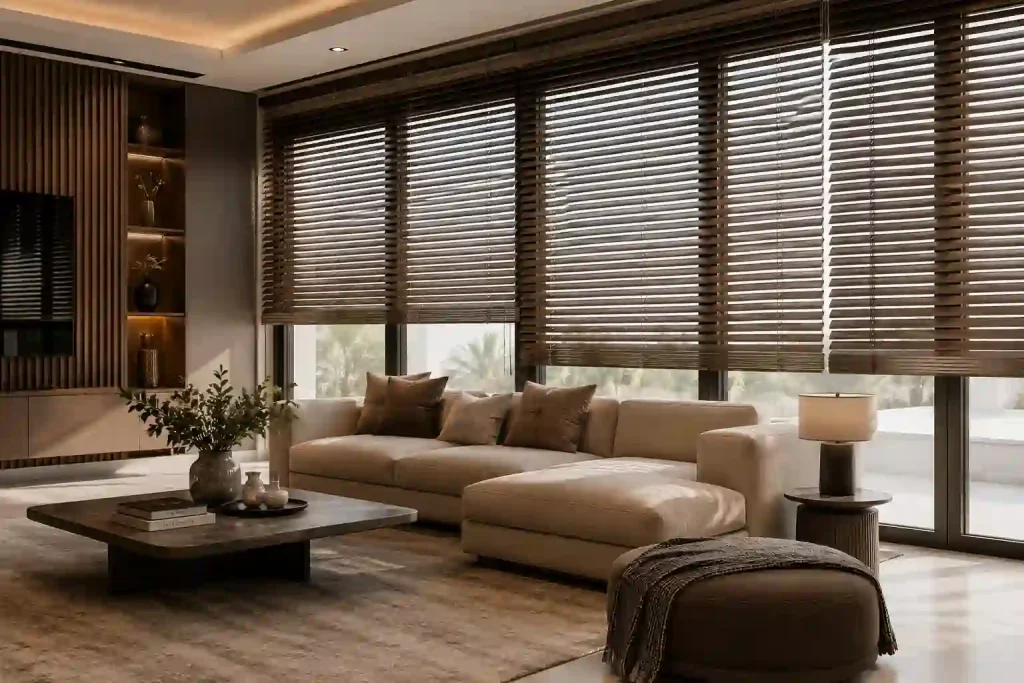
So what is a venetian blind and what is a venetian blind used for in daily life? It is a horizontal window covering built from tilting slats. Each slat rests above the next on a cord ladder. Turning the wand rotates the whole set together. That single motion controls both light and privacy.
The design has barely changed across many centuries. It suits a Dubai apartment as well as an old European drawing room. This mix of simplicity and function keeps it popular across homes and offices today.
What Is a Venetian Blind and How Does It Work?
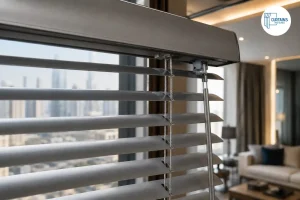
A venetian blind runs on two systems inside its headrail. One system raises or lowers the slats with a lift cord. The other tilts them open or shut using a wand. These two systems work apart from each other. A fault in one rarely touches the other. Pull the lift cord and the blind rises smoothly. Turn the wand and the slats rotate almost fully. Angle them upward for soft indirect daylight. Close them fully and the room turns private fast. Some homeowners also ask what is a venetian blind called elsewhere, since names shift by market.
This simple setup separates venetian blinds from curtains and fabric shades. No fabric sits there to trap Dubai’s summer heat. It is just one clean action most people learn quickly.
What Are Venetian Blinds Made Of?
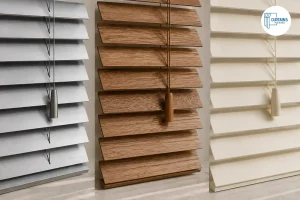
Slat material shapes performance and lifespan together. In Dubai’s climate that choice matters even more.
| Material | Best For | Key Trait |
| Aluminium | Kitchens, bathrooms, offices | Moisture resistant and budget friendly |
| Real wood | Living rooms and bedrooms | Warm look, needs a drier setting |
| Faux wood/PVC | High-humidity or sunlit rooms | Won’t warp or fade under heat |
Aluminium venetian blinds stay thin, light and easy to wipe. That answers what is a venetian blind made for many kitchens. Wooden Venetian blinds bring natural grain and warmth to any room. Faux wood and PVC slats copy that timber look closely. They skip timber’s sensitivity to moisture and daily wear. For sunlit rooms near the coast faux wood usually performs best.
What Are the Different Types of Venetian Blinds?
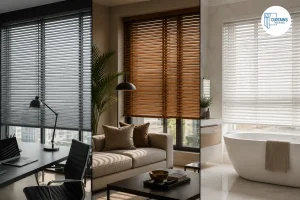
Beyond material Venetian blinds vary by slat width and finish. Here is a look at three common types of venetian blinds.
-
Aluminium Venetian Blinds
Aluminium venetian blinds suit busy and high-traffic spaces well. They resist rust and shrug off daily humidity easily. Slats come in slim widths for modern interiors. Offices and kitchens across Dubai favour them for this reason.
-
Wooden Venetian Blinds
Wooden venetian blinds add texture few treatments can match. Real timber slats look rich in well-ventilated living rooms. They need a stable dry setting to hold their shape. Paired with steady air conditioning they stay looking good for years.
-
Faux Wood and PVC Venetian Blinds
These slats mimic real wood grain without wood’s drawbacks. They handle bathroom steam and strong sun without losing shape. For families wanting a wood look without upkeep this fits well.
What Are the Benefits of Venetian Blinds in Dubai?
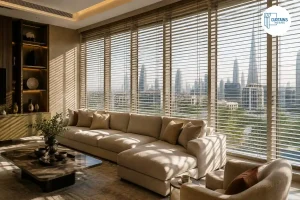
Dubai’s long bright summers test every window treatment.
- Precise light control through adjustable slats.
- Easy wipe-down cleaning unlike heavier drapery.
- Compact stack that suits smaller windows.
- Durable materials built for heat and humidity.
- Wide styling range from sleek aluminium to warm timber.
They also cut glare on screens and furniture in sunlit rooms. That balance of control and low upkeep is hard to beat here.
Where Can You Use Venetian Blinds Dubai Homes Offer?
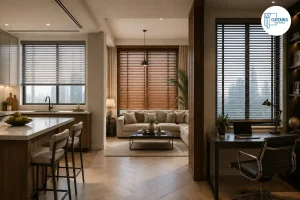
Venetian blinds Dubai homeowners fit them into nearly every room. Kitchens benefit from a wipe-clean surface near grease and steam. Bathrooms use them for quick privacy that also dries fast. Home offices rely on tilted slats to cut screen glare. Living rooms favour wider wooden or faux wood slats for softness. Villas often pair them with sheer curtains for extra texture.
How Do Venetian Blinds Provide Privacy During the Day and at Night?
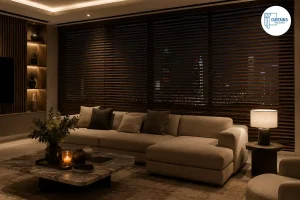
Tilting the slats upward blocks outside views during daylight hours. Light still drifts in even as the view stays shut. This is Venetian blinds for privacy working at its simplest. It helps most when neighbouring buildings sit close together. At night closing the slats fully blocks the view both ways. No interior light competes with the darkness outside then.
How Are Venetian Blinds Different From Other Window Treatments?
Roller blinds vs venetian blinds is a common early comparison. A roller blind uses one fabric piece moving up or down. It offers no in-between setting for finer light control. Venetian blinds use horizontal slats that tilt freely, while other types of window blinds use different designs to control light and privacy.
Vertical blinds share that tilt idea but suit wide glass better. Curtains add softness and sound absorption that slats cannot offer. Many Dubai homes layer curtains and blinds together for this reason.
How Do You Choose the Right Venetian Blind in Dubai?
Start by weighing the room’s exposure and humidity level first. High-moisture spaces call for aluminium or faux wood slats. Formal living areas often suit real wood or wider slats. Narrower slats suit small windows and wider ones suit statement rooms.
Cordless or motorised control helps homes with young children or pets. A short measurement check before ordering avoids most fitting issues later. Once your blind arrives, how to install venetian blinds comes down to a few careful steps.
How Do You Install a Venetian Blind at Home?

- Mark bracket positions level along the top of the window frame.
- Drill and fix the brackets firmly into the wall or frame.
- Click the headrail into the mounted brackets until it locks.
- Attach the tilt wand and test the lift cord movement.
- Adjust end caps and balance for a clean and finished look.
How Do You Clean and Maintain Venetian Blinds?
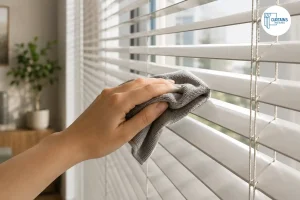
- Dust weekly with a soft brush or microfibre cloth slat by slat.
- Wipe aluminium or faux wood with a barely damp cloth for marks.
- Keep wooden slats dry using only a dry cloth.
- Check cords and tilt mechanisms every few months for wear.
- Deep clean removable slats in soapy water then dry fully before rehanging.
Regular light dusting handles most of this work on its own. It keeps the slats moving freely and the finish looking new for years.
Bringing It All Together
A venetian blind earns its place through simple reliable design. It controls light well and holds up in Dubai’s climate. It suits nearly any room across a home or office. If you are weighing styles for your own windows see our venetian blinds range at Curtains and Blinds.
FAQs
What is the downside of Venetian blinds?
Slats can trap dust between regular cleanings over time. Cords need occasional care to keep them moving smoothly. Wooden slats also need a drier setting to avoid warping.
What does Venetian blind mean?
It means a window covering made of horizontal tilting slats. These slats adjust light and privacy and are raised by cord.
Why are they called Venetian blinds?
The design likely began in Persia long ago. Venetian traders later introduced it across Europe widely. The name simply stuck ever since that time.
Which is better, Venetian or vertical blinds?
Venetian blinds suit standard windows with fine light control. Vertical blinds suit wide glass or sliding doors better. A horizontal slat would struggle to hang evenly there.
What type of blinds look most expensive?
Real wood Venetian blinds usually read as the most upscale. Their natural grain and weight give that impression easily. Faux wood comes close at a noticeably lower price.